


RISCCOM Project Successfully Completed: Celestia Chip Powers UWB Solution for Automotive & Industrial Innovation
Las Palmas de Gran Canaria, December 2025 | Celestia Chip | Grupo Celestia
Celestia Chip is proud to announce the successful completion of the RISCCOM project, an Ultra-Wideband (UWB) indoor localization solution for the industry and automotive sector, plus a complete IEEE 802.15.4z wireless transceiver designed in GlobalFoundries 22 nm FD-SOI for 6–9 GHz bands. The transceiver is now scheduled for manufacturing and validation in 2026.
What RISCCOM Set Out to Do
RISCCOM — RISC-V Based Low Power Secure Multipurpose System for Wireless Communications — was funded by the CDTI with NextGenerationEU funds, within the Recovery, Transformation and Resilience Plan, as part of the Science and Innovation Missions programme linked to the PERTE Chip initiative.
The project’s ambition was both technical and strategic: to develop an advanced microelectronic system combining digital and analogue radio frequency technology, built around a RISC-V microcontroller to minimise energy consumption. This innovative architecture integrates UWB radio standards and was designed to overcome key technological challenges in automotive and IoT environments — addressing areas as diverse as RISC-V processor architecture, UWB signal processing, and cybersecurity in embedded systems.
Beyond the technical, RISCCOM was conceived as a direct contribution to Europe’s technological sovereignty in semiconductors — demonstrating that strategic microelectronic capabilities can be developed entirely within the EU.
Celestia Chip’s Role: Leading the RF Design
Within the consortium, Celestia Chip advanced one of the most technically demanding deliverables: the UWB transceiver design in GlobalFoundries 22 nm FD-SOI technology—a process node enabling high performance, low power consumption, and advanced security in a single chip designed to meet IEEE 802.15.4z requirements and industry standards from FiRa Consortium and Car Connectivity Consortium (CCC).
The result is a complete IEEE 802.15.4z-compliant transceiver covering the 6–9 GHz frequency bands, with direct applications in high-precision indoor positioning, secure vehicle access (PKE), and next-generation connectivity including 6G systems.
This milestone represents a major step forward in Celestia Chip’s RF design capabilities and reinforces its position as a reference in RFIC and MMIC design for demanding environments.
A Strong Consortium, a Shared Mission
The RISCCOM project was initially led by Grupo PREMO and subsequently by IDNEO, who assumed project leadership. The consortium — formed by PREMO, Innova IRV Microelectronics, IDNEO, Celestia Chip, and DEKRA — combined complementary expertise across RF design, RISC-V processor architecture, systems integration, automotive applications, and cybersecurity evaluation, with the shared goal of positioning Spain as a benchmark in the microelectronics sector.
From Chips to Systems: Driving European Sovereignty
RISCCOM proves the consortium can master the full stack—from RISC-V architecture and RF design to signal processing, cybersecurity, and validated prototypes for automotive/industrial use.
This end-to-end approach lies at the heart of Celestia Chip’s «From chips to systems. From R&D to impact» approach— and RISCCOM is its clearest proof of concept to date. The project contributes directly to the EU’s ambition of reaching 20% of global chip production by 2030, with applications in future 6G, high-precision positioning, and next-generation automotive connectivity.
«RISCCOM shows that Europe can design advanced UWB transceivers in-house: a fully IEEE 802.15.4z-compliant transceiver developed in GlobalFoundries 22FDSOI technology, enabling high-precision indoor localisation implementations. This significant microelectronics milestone opens doors to automotive, industrial IoT, and European technological sovereignty,» said Fran Alcalá, CEO of Celestia Chip.
What Comes Next
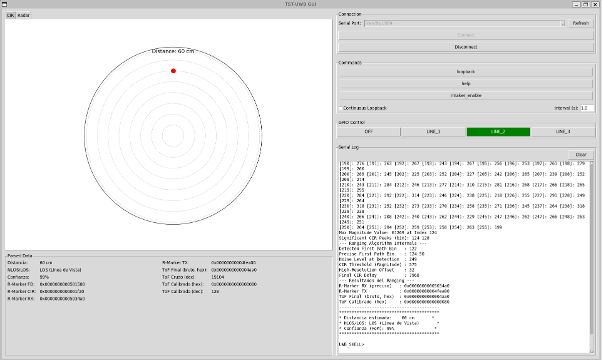
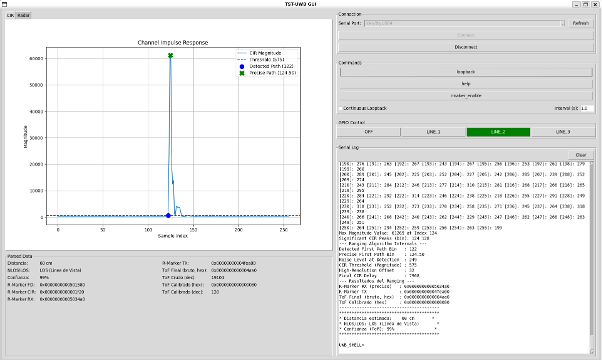
With project milestones achieved—including live functional demos reviewed by CDTI—the RISCCOM transceiver design now moves to silicon manufacturing and validation in 2026.
Celestia Chip extends its gratitude to all consortium partners and to the CDTI and the European Union for enabling this breakthrough through the PERTE Chip Misiones framework.
Ready to collaborate on your RFIC/MMIC or RISC-V project? Get in touch with the Celestia Chip team.
Want to see what’s next? Take a look at all our projects.